Fun Mahjong Match
- 4.9
- Rating
- 1.00M
- Installs
- Free
- Price
 Analysis by App-foxy
I picked up Fun Mahjong Match expecting a simple tile-matching game, and that is exactly what it is—but the simplicity is more useful than it first appears. It gives me a quiet way to focus on a board, remove matching mahjong tiles, and take a short mental break without needing to learn a complicated ruleset. I can start a round quickly, pause my attention when real life interrupts, and return to the same kind of relaxed puzzle rather than managing a large game system.
That makes it especially suitable for a shared household device. One person can use it for a few minutes after lunch, another can pick it up later, and nobody needs to understand a long story or a competitive ranking before enjoying it. At the same time, the lack of a deeper personal structure means it is better treated as a casual puzzle than as a long-term game with separate household identities. My overall impression is favorable, but the right expectations matter.
A calm tile puzzle that works well in short household sessions
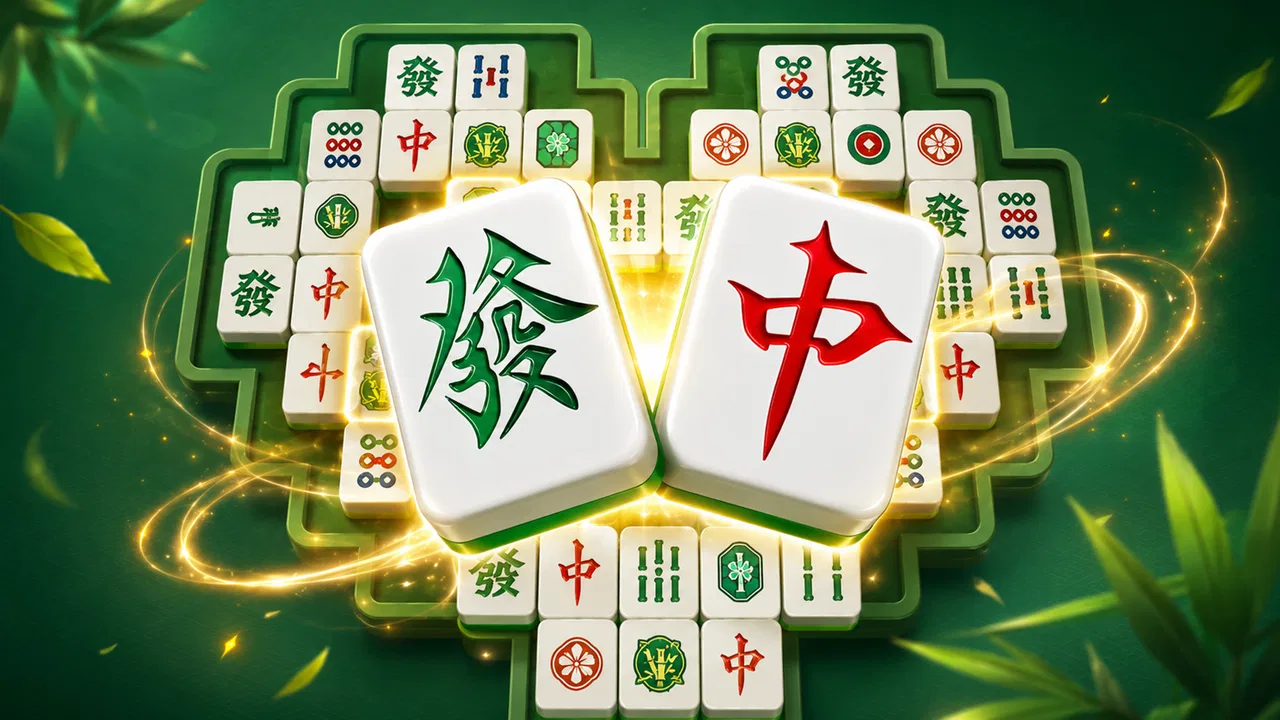
The basic loop is familiar: I look across the arrangement, find matching tiles that can be paired, and clear the board. The appeal comes from combining visual recognition with a little forward planning. It is not demanding in the same way as a timed action game, and it does not ask me to memorize a large collection of rules. The store summary describes it as a way to match tiles, clear boards, and enjoy brain-training fun, and that captures the central experience without needing exaggerated claims.
You May Also Like

 Blood Strike: 2.5 Anniversary
Blood Strike’s Loadouts Turn Every Drop Into a Tactical Gamble
A close look at Blood Strike’s custom loadouts: how fast access to signature weapons reshapes its battle royale rhythm, rewards preparation, and narrows the gap between fights.

 Pandora - Music & Podcasts
Pandora’s Music Is Easy to Start, but Harder to Recover
Pandora’s strength is its low-effort path from a seed to a station. Its weak spot is how much confidence it asks you to place in connection, setup, and quiet recovery.

 8 Ball Pool
 Is Built on Rivalries, Rematches, and Routine
A close look at the rivalries, rematches, shared routines, and unanswered safety questions that turn a quick pool match into a persistent mobile community.

 Samsung Music
’s Quiet Strength Is Playing What You Already Own
Its reach comes less from spectacle than from dependable access to a personal library. That simplicity is both the app’s strongest retention engine and its ceiling.

 AccuWeather: Weather Radar
AccuWeather Review: A Quick, Clear Forecast for Everyday Decisions
For everyday plans, the best forecast is the one you can understand quickly. AccuWeather makes rain timing, radar, and local conditions easy to act on, with a few trade-offs.

 Hill Climb Racing
Why Hill Climb Racing Still Turns Crashes Into One More Run
A tiny car, a bumpy hill and one more upgrade: Hill Climb Racing keeps resurfacing because its simple chaos makes every near-miss feel personal.
More From Our News Desk



What I like most is the low commitment. If I have only a few spare minutes while waiting for something at home, I can play without feeling that I have started an unfinished project. A longer session also remains possible when I want something repetitive and soothing. This flexibility is a genuine strength for a family tablet or a phone that several people use, because the game does not demand a fixed schedule or a group at the same time.
There is also a useful difference between this kind of game and a traditional physical mahjong set. A physical set needs space, several players, and time to organize the pieces. Fun Mahjong Match reduces the activity to an individual matching puzzle, so I can play alone on a sofa, at a kitchen table, or during a quiet break. That convenience is the main reason I would choose it over a boxed board game when I want a solitary activity.
What the play style feels like in practice
The most satisfying moments come when I avoid taking the first obvious pair and instead open a better route through the board. Even in a relaxed puzzle, the order of moves can affect what becomes visible next. I found that scanning the upper or more obstructive parts of the arrangement before making easy matches gives me a clearer sense of the board. That small habit turns the game from random tapping into a more deliberate visual exercise.
My practical tip is to pause for a full scan whenever several pairs are available. I look for tiles that are limiting access to other pieces, then consider whether removing them will expose more useful choices. This is not a complicated strategy guide, but it makes a noticeable difference to how thoughtfully I play. It also gives children or older relatives a simple way to practice observation without making the experience feel like homework.
The trade-off is that the same straightforward design may feel too light for players who want a strong sense of progression. Someone looking for elaborate missions, multiplayer competition, character development, or a detailed campaign will probably find this experience narrow. I would not install it as a replacement for a full strategy game. I see it as a focused puzzle for moments when mental quiet is more important than variety.
Using it on a shared device without confusing everyone’s boundaries
I’d treat the shared device itself as the boundary: decide whether a board belongs to the person who started it, or whether anyone may continue it, before the first handoff. That small agreement keeps casual turn-taking from becoming a dispute over someone else’s choices, and it gives each person a clear way to enjoy the puzzle at their own pace.
Setting expectations before the first round
Because this is a free game in the board category, it is easy to imagine it becoming a common app on a household phone or tablet. Before sharing the device, I would agree on a simple routine: each person plays their own session, avoids changing another person’s place, and returns the device when finished. That sounds obvious, but casual games are often used spontaneously, and clear expectations prevent small disagreements.
I would not assume that the game creates separate household profiles or personal account spaces. The safest approach is to treat the device itself as the boundary. If the phone has built-in user switching, I would use that at the device level; otherwise, I would consider Fun Mahjong Match a shared activity rather than a private personal game. This distinction matters when different people care about keeping their own progress or preferences separate.
For a child using a parent’s phone, I would also make the device handoff part of the routine. The child can play during an agreed window, then pass the phone back rather than continuing indefinitely. For an older relative, I would keep the game easy to reach and avoid rearranging the home screen after every session. The game’s uncomplicated purpose makes these arrangements practical, but it does not replace household coordination.
Why coordination matters more than competition here
Fun Mahjong Match is better suited to taking turns than to playing together in real time. I would use it as a quiet rotation: one person plays while another reads, watches television, or prepares something nearby. That works well because nobody has to wait for an opponent, and the activity does not create the noise or urgency associated with many multiplayer games.
A useful household practice is to decide whether the current board belongs to the person who opened it. If the answer is yes, other users should start their own session rather than tapping through it. If the answer is no, the device becomes a communal puzzle and nobody should expect personal continuity. Choosing one rule avoids the awkward situation where someone clears a board that another person was deliberately studying.
This is also where the game compares favorably with competitive alternatives. A head-to-head tile game can be exciting, but it may create pressure between siblings or between adults and children with different levels of experience. Here, the focus stays on the board itself. The downside is that there is no built-in social reason to return together, so households wanting conversation, cooperation, or friendly rivalry would be better served by a multiplayer board game.
Age context and trust on a family phone
The content rating is Everyone, which fits the nonviolent, easy-to-understand nature of the puzzle. I would be comfortable presenting it as an age-appropriate casual option, while still remembering that an age label does not explain every part of a child’s device experience. Parents should use their normal judgment about screen time, app access, and whether a child is allowed to use the phone independently.
For younger players, the main benefit is the clear visual task: find pairs and make progress. I would sit with a child for the first few sessions, not because the rules are difficult, but because shared play reveals whether the board is comfortable to read and whether the child understands the idea of planning rather than tapping randomly. That first conversation can also establish that the game is one activity among others, not an unlimited reward.
Older adults may appreciate the slower, visual nature of the game, particularly if they prefer a solitary puzzle to a fast action title. I would introduce it without promising medical or cognitive results. It can be a pleasant way to exercise attention and pattern recognition, but I would describe it as entertainment with a mental challenge, not as a treatment or a guarantee of improved memory.
Performance, access, and the practical details I would check
The game is free, which lowers the barrier for trying it on a shared device. It was released on April 28, 2026, and the current version is 1.1.8. It requires Android 6.0 or later, so compatibility should be straightforward for many older Android phones and tablets, although I would still check the particular device before planning a household installation.
Its reach is already substantial, with over one hundred thousand installs and an average rating of 4.9 from around seven thousand ratings. Those figures suggest that the basic experience has connected with a broad group of players, but I would not treat popularity as proof that every household will enjoy it. A person who dislikes tile puzzles will not be converted by a high rating, and someone seeking deep strategy will still want a different game.
The developer is EWG STUDIO. When I assess a small, focused game such as this, I pay more attention to whether the central activity remains comfortable and understandable than to the size of the developer’s name. The current version is the practical point of reference for installation, so I would keep the app updated through the normal store process rather than relying on an old copy passed between devices.
On a shared phone, I would also check the screen size and touch response before giving it to someone who has difficulty with small visual details. A compact phone may make tile recognition less comfortable than a tablet, while a larger display can make scanning easier. That is not a special feature of the game; it is a real usability trade-off when the same app is expected to serve children, adults, and older relatives on different devices.
Where it beats the usual alternatives
Compared with a physical mahjong set, this game wins on convenience and solo access. I do not need to find opponents, clear a table, or store a box of tiles. Compared with a competitive online board game, it is calmer and less dependent on another person’s availability. Compared with a general brain-training collection, it offers a more focused experience rather than switching between unrelated exercises.
Those strengths come with clear limits. A physical set provides tactile handling and face-to-face conversation, which a phone cannot reproduce. A multiplayer app gives social interaction and a stronger sense of shared occasion. A larger puzzle collection offers more variety when one matching format becomes repetitive. I would choose Fun Mahjong Match when I want a quiet, self-contained tile activity, not when I want the device to become a complete board-game hub.
One non-obvious advantage is that its narrow purpose makes it easier to recommend selectively. I can suggest it to someone who wants a gentle puzzle without also asking them to learn several modes, manage a complicated collection, or keep up with other players. The corresponding weakness is that there is less reason to explore once the central matching routine stops feeling fresh. Its value depends heavily on how much the user enjoys repetition with small decisions.
A realistic evening with the app
Imagine a shared tablet in a household where one adult is waiting for dinner to finish, a child has completed homework, and another adult wants to read. The first person can play a short board, hand over the tablet, and let the next person begin without requiring a group match. If the family has agreed not to overwrite one another’s sessions, each user can enjoy the puzzle without turning the device into a source of arguments.
In that situation, I would keep the tablet in a common area and make the handoff explicit. I would also avoid presenting the game as a prize that can be earned endlessly, because its relaxing design can make “one more board” easy to extend. For an older family member, I would offer help with the first launch and then let them decide whether the visual matching feels comfortable. The game works best when the household treats it as an optional shared resource, not as a substitute for conversation or rest.
Who should choose it, and who should skip it
I would recommend Fun Mahjong Match to someone who enjoys mahjong-style tile matching, wants a free board game, and prefers short sessions that can be played alone. It is a good fit for a quiet break, a shared tablet, or a player who finds competitive games tiring. It also suits households that want an activity people can take turns using without needing everyone to be present at once.
I would be more cautious about recommending it to a player who needs strong personal progression, detailed statistics, rich customization, or a social community. I would also point fans of traditional mahjong toward a more complete mahjong simulation, because matching tiles on a clearing board is not the same as learning or playing the full table game. Likewise, someone who wants a broad selection of puzzles may be happier with a collection app than with this focused format.
For families, the key question is not simply whether everyone can understand the game. It is whether everyone is comfortable sharing the same device experience. If separate progress and personal boundaries are important, I would establish those rules before installation. If the household is happy with informal turn-taking, the game’s simplicity becomes an advantage rather than a limitation.
There is also a difference between relaxing and being challenged. I found the matching task engaging enough to keep my attention, but its gentle structure will not satisfy everyone who describes themselves as a puzzle enthusiast. I would use it when I want to slow down and look carefully, not when I want a demanding test that continually introduces new mechanics.
My household verdict
Fun Mahjong Match succeeds because it keeps its promise small and understandable. I can open it, focus on matching tiles, clear a board, and stop without learning a complicated system. The free price and Everyone rating make it easy to consider for a family device, while its support for Android 6.0 or later gives it a practical place on older compatible hardware.
My recommendation comes with one important condition: decide how the shared device will be used. The game is naturally good for taking turns, but I would not assume that it handles separate household identities for you. A simple agreement about sessions, progress, and screen time solves most of the practical friction. That makes it a pleasant communal option even though the actual play remains solitary.
In the end, I see this as a focused, low-pressure board puzzle rather than a complete mahjong platform. It is worth trying if you want a calm visual challenge that fits around everyday life. I would skip it only if you need multiplayer interaction, traditional mahjong rules, or a deep progression system. For the right player—and especially for a household that values quiet, flexible turn-taking—the strongest reason to install it is its uncomplicated routine.
FAQs for Fun Mahjong Match
01What is Fun Mahjong Match and how does it differ from traditional Mahjong?
Fun Mahjong Match is a digital adaptation of the classic Mahjong solitaire game. Unlike traditional Mahjong, which is played with four players using tiles, Fun Mahjong Match is a single-player game focusing on matching open pairs of identical tiles to clear the board. It’s designed for quick, engaging play sessions with a variety of themed tile sets.
02Is Fun Mahjong Match free to play, or does it include in-app purchases?
Fun Mahjong Match is free to download and play, but it does include optional in-app purchases. Players can buy various items such as additional themes, hints, or tile sets to enhance their gaming experience. However, these purchases are not necessary to enjoy the core gameplay, which remains fully accessible without spending money.
03What are the system requirements for installing Fun Mahjong Match on Android and iOS devices?
For Android devices, Fun Mahjong Match requires Android 5.0 (Lollipop) or higher. On iOS, it requires iOS 10.0 or later. The app is lightweight and optimized to run smoothly on both older and newer devices, ensuring a wide range of compatibility for users across different platforms.
04Does Fun Mahjong Match offer any multiplayer or social features?
Fun Mahjong Match primarily focuses on single-player gameplay. However, it offers social features such as leaderboards and achievements, allowing players to compare scores with friends and other players globally. This competitive element adds an extra layer of challenge and motivation for those looking to improve their skills.
05Are there any accessibility options available in Fun Mahjong Match?
Yes, Fun Mahjong Match includes several accessibility options to enhance the gaming experience for all users. It offers adjustable font sizes, colorblind mode, and customizable tile designs to accommodate different visual preferences and needs. These features ensure that the game can be enjoyed by players with varying abilities.
Pros
- Engaging and colorful graphics
- Smooth and intuitive controls
- Variety of levels and challenges
- Relaxing background music
- Offline play available
Cons
- Contains in-app purchases
- Ads can be frequent
- Limited free hints
- Requires updates for new levels
- No multiplayer option

Fun Mahjong Match
Gallery